
The hustle that got you to $20 million won’t get you to $200 million.
Agility Growth Partners builds the commercial infrastructure — strategy, people, process, analytics & metrics, and management routines — that enables growth to come from a consistently repeatable system instead of from heroics.
We are operators who have been in your shoes and understand your situation. We have owned P&Ls ourselves, not just provided theoretical business advice.
If three of these are true, we should talk.
Your forecast is a number your sales leader defends, not one you believe.
Every rep sells a different way, and the best one won’t be here forever.
You can’t say with confidence which customers and which products actually make money.
Marketing and sales each privately believe the other one is the problem.
Decisions that used to happen in a hallway now take three meetings and still don’t hold.
You’ve added people faster than you’ve added process, and the org chart no longer answers who owns what.
… or if revenue hasn’t been meeting expectations.
Companies don’t stall because they run out of market. They stall because the way they operate prevents scaling.
The first $20 million usually comes from a few things working extraordinarily well: a founder who can sell, a handful of relationships, and a small group of people who simply know what to do without being told.
None of that is written down. It doesn’t need to be — until it does.
Somewhere between $20M and $150M, the informal system starts failing quietly. Not dramatically; nobody announces it. Decisions slow. Accountability blurs. Two functions optimize against each other because nobody defined which one owns the outcome. Growth continues but gets more expensive, and eventually the effort stops converting.
What’s missing at that point isn’t ambition or talent. It’s infrastructure: a clear strategy everyone can act on, defined operating processes, the right KPIs measured consistently, unambiguous cross-functional roles, and management routines that make execution visible instead of hoped-for.
That’s the work we do, and we do it very well.
Four key elements must be present for growth to become repeatable.
A strategy people can execute.
Growth strategy, integrated strategic planning, portfolio and pricing architecture, and go-to-market design — resolved to the level where a sales rep knows what to do differently on Monday morning.
A commercial organization built to execute it.
Sales organization design, sales process design and implementation, incentive plan structure, broker and distributor management, and the training that makes a new selling motion actually take hold.
Measurement on which you can run the business.
The right KPIs identified, defined, and measured consistently — including forecasting you believe and customer and product profitability you can see.
Management routines that hold it together.
Cross-functional roles and responsibilities defined without ambiguity, operating processes documented and followed, and the review cadence that makes execution visible instead of assumed.
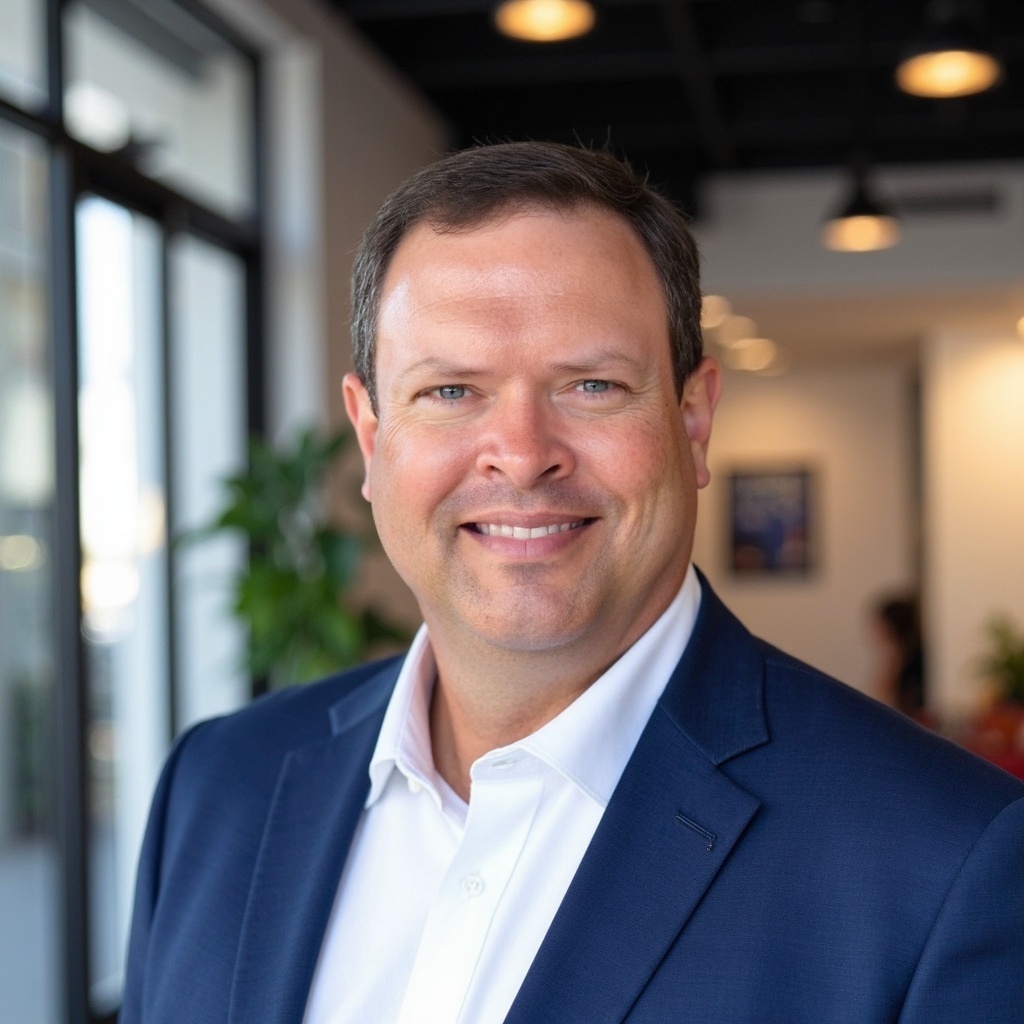
Most strategy firms send a partner to sell and analysts to deliver.
Mike Largent has run the types of businesses he now advises.
He managed a $100 million P&L across 13 business units and 1,200 employees, and helped take that company from $75 million to $350 million in four years. He co-led a $300 million PepsiCo division formed by merging four separate sales forces, and delivered the only region of four to beat plan in its first year. He ran Frito-Lay’s $350 million national vending business.
He has also spent time on the other side, as a consultant at Zyman Group — the firm founded by Coca-Cola’s former CMO — leading commercial transformations for ConAgra, MillerCoors, and Alcoa.
That combination matters for one reason: he has had to execute plans like the ones he writes, in front of people who didn’t initially want to change them. It produces a different kind of recommendation — one built for an organization that has to actually do it on Monday.
You work with him. Not with a team he assembled for the proposal.
Testimonial
Mike Largent supports our 20+ First Avenue Venture portfolio companies as they go from early stage to institutional funding. Helping these companies create scalable sales processes requires an excellent grasp of the sales process — from lead generation to close. More than anything, working across these companies requires a doer, and Mike is that and more.
The three other things you could do.
Hire a global strategy firm.
They will bring more analysts and significantly higher fees. You will get a rigorous answer and then own the hard part alone. We stay through implementation, and the senior person on the project is generally the only person on the project.
Bring in a fractional CRO or CMO.
A fractional executive fills a seat. We build the system that makes the seat work — and then transition it to whoever fills the role permanently.
Hire a VP and hope.
A good VP is the right answer eventually. But hiring one before you have defined the strategy, the process, the necessary roles and the metrics means asking a new person to invent all three while also carrying a number. That is how good hires fail.
Selected engagements
Three sales forces, one company.
A $1.2B food ingredients division assembled through acquisition was still operating as three separate companies. Consolidating the sales organizations and integrating sales, marketing, and customer service through process design — with roles, KPIs, and training built to match — moved revenue up 16% and cut SG&A 22%.
Building the system while the company scaled.
A PE-backed platform grew from $75M to $350M in four years. The work was standardized KPIs, defined operating procedures, management routines, and reporting that made performance visible — so new units could open without each one improvising.
Selling through people you don’t employ.
A $6.2B brewer’s growth depended on distributors executing a strategy they had no part in building. Re-segmenting the market and designing for distributor buy-in as a constraint rather than a rollout step produced roughly $85M in incremental revenue.
Start with a diagnosis, not a proposal.
A three-week commercial readiness assessment: how you go to market, how the sales organization is built, how pricing is structured, and what is actually being measured. You get a prioritized gap assessment and a costed roadmap — whether or not you do anything else with us.
Agility Growth Partners LLC · Birmingham, Alabama · 205.613.1421